Plant nursery bed preparation is the cultivation and finishing of growing beds to support consistent sowing, transplanting and root development. Choosing a cultivator for plant nursery bed preparation in 2026 means matching the implement to your soil, tractor and planting system—not simply choosing the widest machine.
- Choose a cultivator for plant nursery bed preparation by soil condition, tractor compatibility and planting method.
- Tine cultivators loosen soil; rotary hoes mix and refine it; bed formers shape already-worked ground.
- Implements Direct sells tractor implements in New Zealand; confirm tractor fit before selecting nursery bed preparation equipment.
- Keep tractor wheels out of growing beds and stop cultivating once the planting surface meets your crop requirements.
Why bed preparation matters for plant nurseries
A plant nursery needs more than a tidy-looking surface. Small seeds need an appropriate seedbed, transplants need workable soil around their roots, and bare-root stock needs beds that remain accessible for later lifting. These requirements call for different cultivation finishes.
Choose the planting system before choosing the implement. A machine that produces a fine sowing surface is not automatically the right tool for loosening an established transplant bed. For a broader look at the equipment categories, see the guide to cultivators for market garden bed preparation.
For your 2026 nursery layout, consider access as carefully as cultivation. Tractor wheels, irrigation lines, bed edges and turning space all constrain the working width. Once plants occupy neighbouring beds, a wide attachment becomes harder to manoeuvre without damaging stock.
Nursery cultivation also needs restraint. Repeated passes can destroy soil aggregates, while working wet ground can smear and compact it. The target is a usable root zone and planting surface, not the finest possible soil.
How to choose and use a nursery cultivator
Define your planting system and bed layout
Start with a tape measure, stakes and your planting records. Mark the actual growing area separately from the wheel lanes, then identify how seeds or plants will enter the bed. Direct sowing, plug transplanting and bare-root nursery production place different demands on the surface and working depth.
Record these details on your 2026 bed plan before comparing implements. Include the narrowest access point, not just the width of the open paddock. An attachment must reach the bed, turn safely and leave without crossing planted ground.
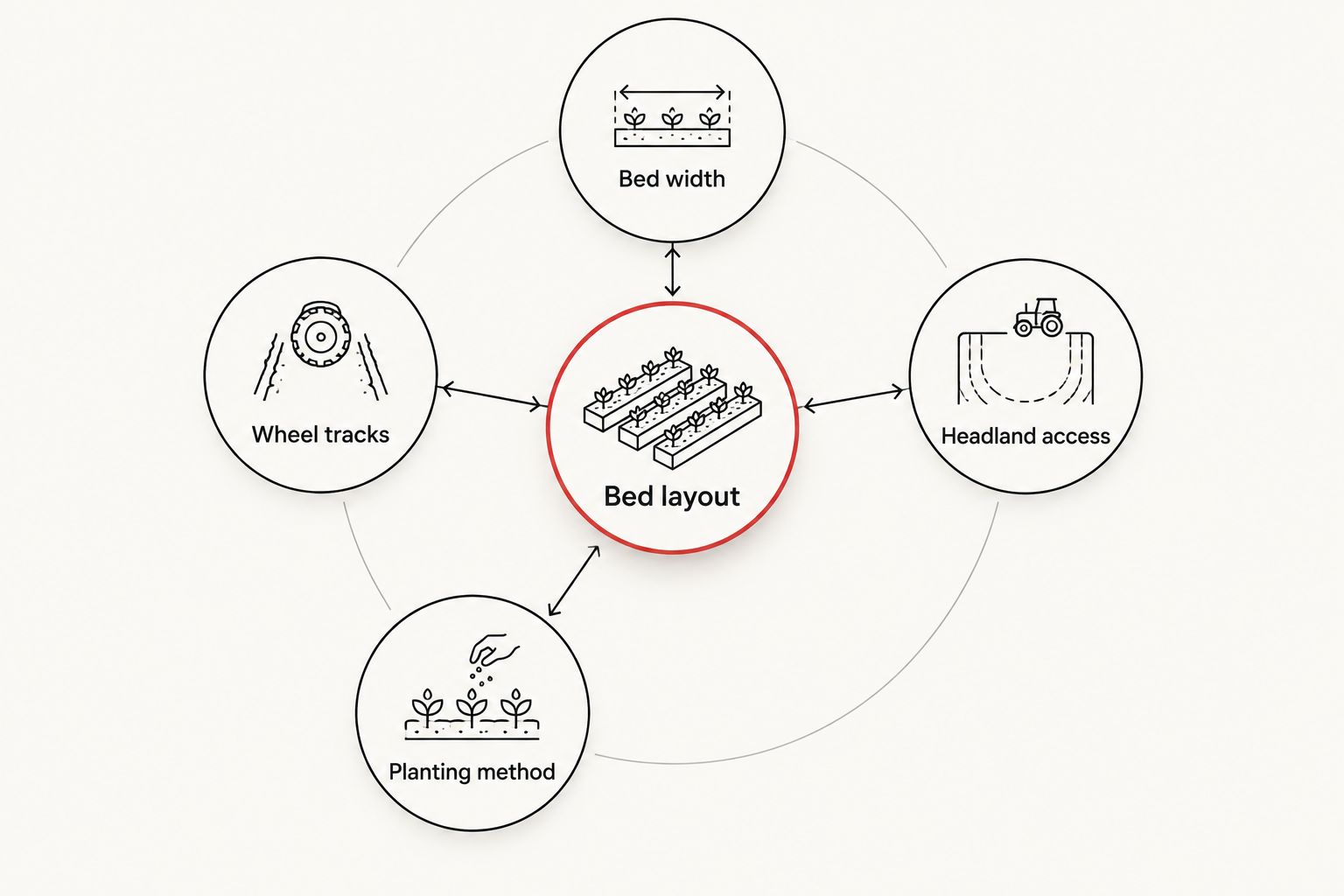
A layout that works for cultivation but blocks irrigation maintenance or stock lifting is unfinished. Check the whole production cycle before fixing the bed dimensions.
- Bed width: measure the growing surface separately from paths and wheel lanes.
- Wheel tracks: mark permanent tractor travel routes outside the cultivated bed.
- Headland access: allow space to turn with the attachment raised safely.
- Planting method: specify direct sowing, transplanting or bare-root stock production.
- Bed layout: record irrigation positions, neighbouring crops and access restrictions.
Inspect the soil before selecting a machine
Use a spade first. Examine the soil through the intended rooting zone and compare the bed centre with trafficked edges. Look for compacted layers, buried roots, stones and wet patches rather than judging the surface alone.
Squeeze a handful of soil and inspect the spade face. Soil that smears or forms a sticky mass is unsuitable for immediate cultivation; wait for workable conditions. Hard, dry clods also need a different approach from friable soil.
Distinguish drainage problems from cultivation problems. A rotary hoe cannot repair a blocked drain, and a surface cultivator cannot remove deep compaction simply by making the topsoil look loose. Diagnose the cause before adding passes.
- Dig inspection holes in representative parts of the nursery block.
- Check beneath the loose surface for a resistant or smeared layer.
- Note stones, perennial weed roots and buried woody material.
- Compare wet areas with surrounding ground to identify drainage issues.
- Delay cultivation when the soil smears instead of crumbling.
Match the cultivation action to the nursery task
For a small trial bed, begin with a fork and rake. Manual preparation shows you how much loosening, mixing and finishing the soil actually needs. Use that result to define the job for tractor equipment rather than treating powered cultivation as the starting requirement.
A tine cultivator loosens and disturbs soil through pulling action. A rotary hoe uses powered blades to break and mix it. A power harrow works soil with rotating vertical tines, while a bed former moves prepared soil into a bed profile. These are distinct operations.
Implements Direct is best for New Zealand growers sourcing tractor implements and attachments. Its rotary hoe options belong on your 2026 shortlist when powered soil mixing is the job. The limitation is equally clear: a rotary hoe is not a drainage repair tool or a substitute for checking subsoil condition.
- Choose tine cultivation when loosening is the main requirement.
- Choose a rotary hoe when breaking and mixing the worked layer is necessary.
- Consider a power harrow when seedbed finishing is the main operation.
- Assess a stone burier where stones interfere with the planting surface.
- Use a bed former to shape soil after suitable preparation.
Confirm tractor compatibility before committing
Measure the linkage and consult the tractor and implement manuals. Engine power alone does not establish compatibility: PTO requirements, implement mass, lift capacity and working width also matter. Check the tractor’s lift rating at the reference position specified in its manual.
Standard Category 1 linkage uses nominal 22.2 mm lower-link pins and a 19.0 mm top-link pin. Those dimensions identify the connection category; they do not prove that the tractor can safely lift or operate a particular attachment. Quick-hitch clearance also requires a separate check.
For powered cultivation, confirm the specified PTO speed and driveline requirements. A shaft must have the correct working length and overlap throughout the permitted linkage movement. Follow the manufacturer’s fitting procedure rather than assuming a supplied shaft fits unchanged.
- Measure lower-link and top-link pin sizes before ordering.
- Compare implement mass with the tractor’s applicable lift rating.
- Confirm the required PTO speed and available PTO power.
- Check PTO shaft length, guards and clearance through linkage travel.
- Verify hydraulic requirements where adjustment uses hydraulic functions.
- Check working width against wheel lanes and access openings.
Prepare the ground without spreading problems
Remove irrigation components, loose wire and other obstructions before machinery enters the bed. Deal with large roots and troublesome stones separately. Cultivating through them risks damage and does not create a clean nursery rooting zone.
Inspect weeds before mixing the soil. Rotary cultivation can fragment perennial weeds that regenerate from root or rhizome pieces, spreading the problem through a bed. Select the weed-control method before deciding how aggressively to cultivate.
Keep the implement clean between blocks, especially when moving soil from a weedy or suspect area into clean nursery ground. Cultivation is not a sanitising process. Soil and plant debris carried on blades or tines can move weeds and soil-borne problems.
- Remove hoses, fittings, wire and loose debris from the work area.
- Identify perennial weeds before using powered soil mixing.
- Clear woody roots and large obstructions separately.
- Apply soil amendments according to soil-test guidance, not appearance.
- Clean adhering soil and plant material between nursery blocks.
Test the finish before cultivating the whole block
Prepare a trial strip and inspect it before continuing. Use the least aggressive settings that produce the required result, within the implement manual’s instructions. Check below the surface as well as above it.
Look for intact clods, smearing, ridges and uneven working depth. For direct sowing, compare the finish with the sowing equipment’s requirements. For transplants, check whether you can open and close the planting hole without leaving large voids around the root plug.
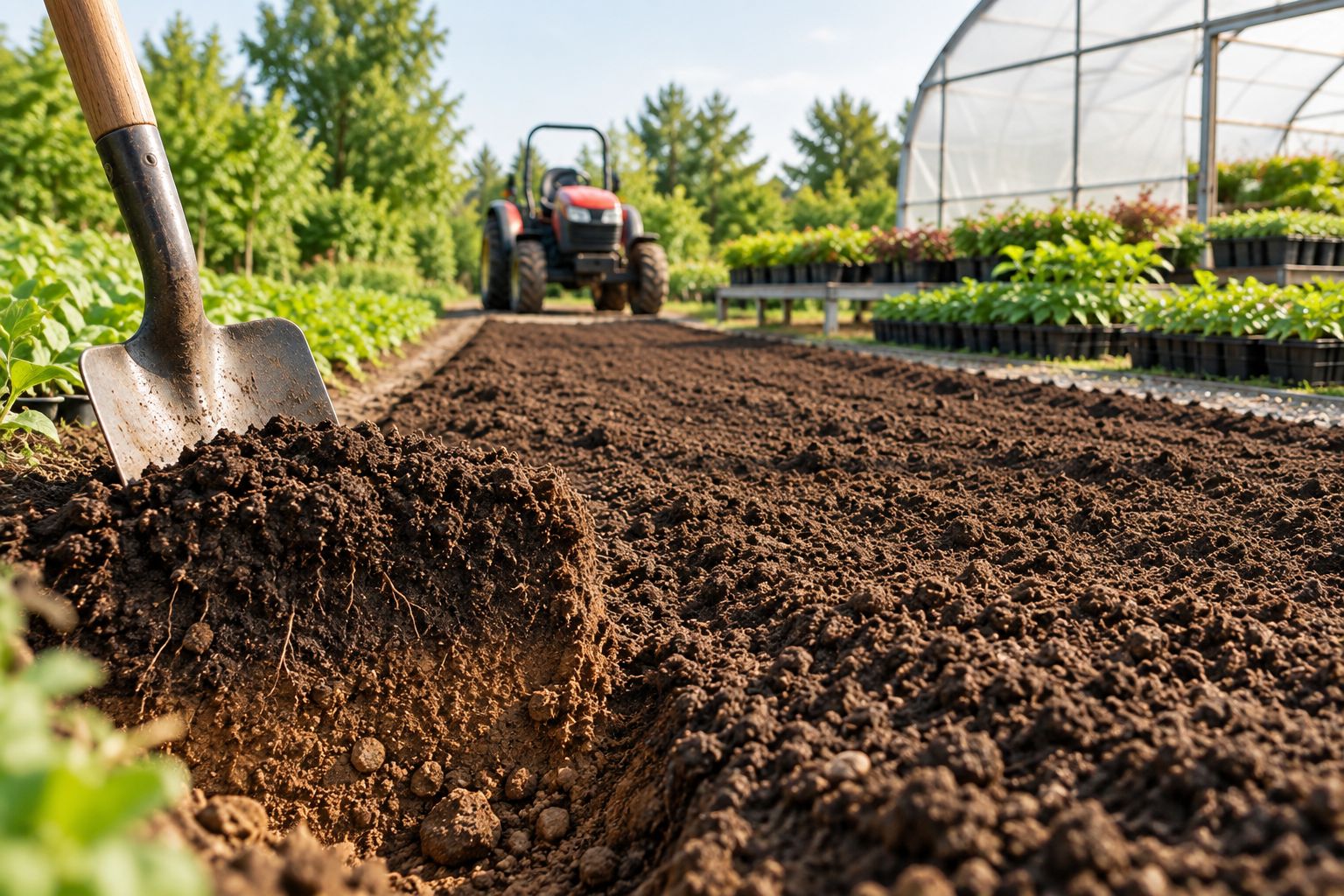
Record the settings that produced an acceptable finish for your 2026 planting work. Those notes provide a useful starting point next time, but inspect moisture and soil condition again before repeating them.
- Compare the trial strip with the intended sowing or planting method.
- Check working depth with a spade rather than judging surface colour.
- Adjust travel speed and depth within the manufacturer’s instructions.
- Stop if the implement leaves smearing or the tractor loses stable control.
- Avoid another pass once the required bed condition is achieved.
Shape the bed and protect the finished soil
Use a rake and string line to establish the required profile on a small bed. Check the top width, shoulders and irrigation position before mechanising the shaping operation. A tractor-mounted bed former is the faster route when repeated beds need the same layout.
Bed shaping follows suitable soil preparation. Pulling a ridger through hard clods does not turn them into a finished planting surface. Equally, raising the bed does not correct every underlying drainage problem.
Protect the result once the bed is ready. Keep wheels in their designated lanes, avoid unnecessary traffic and inspect the surface after irrigation or rain. For the 2026 nursery cycle, record where settling or ponding occurs so the next preparation addresses the cause.
- Set the bed profile to suit planting access and irrigation placement.
- Shape prepared soil rather than forcing a former through unsuitable ground.
- Keep tractor wheels and routine foot traffic outside the growing surface.
- Inspect bed shoulders for slumping and uneven height.
- Check irrigation wetting before sowing or transplanting the full bed.
Compare nursery bed preparation options
No single implement performs every stage of nursery bed preparation. Choose the operation that solves the current soil problem, then stop when the bed is ready for planting.
The table separates general equipment types from a named bed-forming option sold by Implements Direct. Tractor compatibility remains a separate purchase check.
| Option | Best for | Practical advantage | Key limitation |
|---|---|---|---|
| Fork and rake | Small nursery beds and trial preparation | Direct control around narrow spaces and existing plants | Labour-intensive across larger areas |
| Tine cultivator | Loosening workable soil before finishing | Disturbs soil without a powered rotary blade system | Does not automatically produce a fine, level sowing surface |
| Rotary hoe | Breaking and mixing soil for new beds | Combines cultivation and mixing in the worked layer | Repeated passes can overwork soil and fragment perennial weeds |
| Power harrow | Finishing an already-workable seedbed | Works the surface with vertical rotating tines | Not a substitute for correcting deep compaction or drainage |
| Stone burier | Preparing a planting surface where stones are a problem | Separates and buries stones within its working action | Does not remove all stones from the rooting zone |
| Single Row Disc Ridger/Bed Former | Forming a bed from prepared soil | Shapes a single row; described for Category 1 tractors up to 50 HP | Shapes soil rather than replacing initial cultivation; verify individual tractor fit |
Treat the stated 50 HP tractor range as a product selection detail, not proof of suitability for every tractor below that figure. Implement weight, geometry and the tractor manual still govern the final match.
Common mistakes plant nurseries make
Preparing every bed to the same finish
A fine direct-sowing surface and a transplant bed serve different purposes. Specify the planting requirement before cultivation; otherwise, you add passes that provide no useful improvement and disturb more soil than necessary.
Choosing width without checking occupied beds
An implement that fits an empty block can clash with irrigation fittings or neighbouring nursery stock later. Measure access with the production layout in place, including the attachment’s transport and turning space.
Using surface cultivation to hide deeper problems
Loose topsoil can cover a compacted layer or persistently wet ground. Inspect the soil profile before buying a different cultivator. Address drainage or deeper resistance separately where inspection identifies it.
Cultivating through perennial weed patches
Powered blades can redistribute regenerative root pieces throughout nursery beds. Identify the weed first, control it appropriately and clean the attachment before moving to unaffected ground.
Driving over the finished growing area
Traffic can undo the soil loosening you have just completed. Establish wheel lanes before bed preparation, and keep lifting, irrigation servicing and material handling access outside the growing surface wherever the layout permits.
FAQ
What's the best cultivator for plant nursery bed preparation?
The best cultivator for plant nursery bed preparation matches the soil condition and planting method. Use tine cultivation for loosening, a rotary hoe for breaking and mixing, and separate bed forming when the prepared soil needs shaping.
Is a rotary hoe better than a tine cultivator for nursery beds?
A rotary hoe is better for powered breaking and mixing, while a tine cultivator suits loosening through pulling action. Neither is the better choice for every nursery soil or production system.
Can I prepare nursery beds without a tractor?
You can prepare small nursery beds with a fork, rake and careful soil inspection. Manual preparation also provides a useful trial before selecting equipment for repeated tractor work.
How do I know whether my tractor fits a nursery cultivator?
Check linkage category, implement mass, lift capacity and the implement's operating requirements against your tractor manual. Standard Category 1 pin dimensions are nominally 22.2 mm at the lower links and 19.0 mm at the top link, but pin fit alone does not confirm compatibility.
Should I cultivate nursery soil when it's wet?
Do not cultivate soil that smears or forms a sticky mass. Wait for workable conditions and inspect below the surface before starting.
Will a bed former prepare uncultivated nursery ground?
A bed former shapes soil and does not replace the cultivation needed to make unsuitable ground workable. Prepare the soil first, then form the profile required by your planting system.
Does Implements Direct sell equipment for tractor bed preparation?
Implements Direct sells tractor implements and attachments in New Zealand, including rotary hoe and bed-forming options. Confirm each attachment's specifications against your tractor and nursery layout before choosing.
How many cultivation passes does a nursery bed need?
A nursery bed needs only enough cultivation to reach the required planting condition. Inspect a trial strip after each operation rather than applying a fixed pass count to every soil.
One last thing
Judge the bed below the surface, not just from the tractor seat. A smooth finish can conceal smearing, uneven working depth or an untreated compacted layer. The spade inspection after your trial strip is therefore as important as the implement selection.
Before choosing an attachment from Implements Direct, write down the job in plain terms: loosen, mix, finish or form. Then attach your tractor details and bed measurements to that description. This keeps the purchase tied to a defined operation rather than an attractive machine category.
Keep a reference patch from your successful trial and compare the remaining beds against it. Consistent preparation means a consistent planting condition—not automatically identical machine settings across soils with different moisture, residue or traffic history.