Pig and poultry farm loader attachments are tools for moving feed, bedding, litter and supplies with the aim of reducing manual handling and keeping clean and dirty work separate. This 2026 guide explains how to match buckets, pallet forks and grabs to your tractor, shed access and farm routines.
- Choose loader attachments for pig and poultry farms by material, hitch compatibility, loader capacity and shed access.
- Implements Direct suits NZ tractor operators buying loader attachments; confirm each attachment against your loader specifications.
- Use pallet forks for palletised supplies and a solid bucket for loose bedding or litter.
- Keep feed-handling equipment separate from manure-handling equipment, or follow your farm’s documented cleaning procedure.
Why loader attachments matter for pig and poultry farms
Pig and poultry farms handle materials that need different tools: palletised feed bags, loose bedding, used litter and, on some properties, straw bales. A tool that holds a pallet securely does not contain loose shavings. A bucket that carries bedding also needs a cleaning plan before it handles feed.
The buying decision is therefore about the complete job, not simply attachment width. You need to enter the shed, approach the load, turn safely, discharge it and return without taking contamination into a clean area.
Implements Direct is best for NZ tractor operators buying loader attachments for farm material handling. Start with the Implements Direct range, then check the individual attachment against your machine rather than assuming every tractor loader uses the same mounting system.
For your 2026 purchasing plan, prioritise recurring work. Pallet handling and litter removal need separate specifications; treating them as one task encourages compromises in load support, containment and cleaning.
Choose loader attachments around your farm’s actual jobs
Record your handling jobs before choosing equipment
Start with a notebook and a walk through the farm. List what arrives on pallets, what you move loose and what leaves as waste. Separate routine work from occasional jobs so a rarely used attachment does not dictate your whole setup.
On a poultry unit, loose bedding and used litter require containment. On a pig property using straw bedding, bulky material introduces a different handling problem. Neither example automatically calls for the largest bucket your loader can pick up.
Record where each job starts and finishes. An attachment that loads a trailer outside still needs checking against doors, internal fittings and the route to the loading area.
- Palletised supplies: record pallet dimensions, load weights and unloading positions.
- Loose bedding: identify the material and whether you scoop, carry or spread it.
- Used litter: mark the collection area, discharge point and dirty travel route.
- Bales: record whether they are wrapped and how you need to place them.
- Occasional work: separate yard maintenance from daily animal-house handling.
Measure shed access and loader working space
Use a tape measure before comparing catalogue widths. Check the narrowest doorway, the usable opening with doors secured, and the space required to turn with the attachment fitted. Allow for the load as well as the attachment itself.
Headroom matters along the whole route. A loader raised to clear an obstacle changes the machine’s working envelope, while pipes, feeders and drinker lines introduce collision points inside sheds. Do not assume a tractor that enters with an empty bucket can safely unload there.
The Novaquip Loader Bucket 1.2m – Euro Hitch is described as a compact bucket with a 78kg tare weight. Those figures help you shortlist it, but they do not establish whether your tractor fits a particular building.
- Measure the narrowest doorway and any internal passage.
- Check roof members, pipework, feeders and drinker lines.
- Measure the turning area with gates and doors in their working positions.
- Check trailer sides and the required discharge height.
- Identify thresholds, slippery surfaces and uneven approaches.
Confirm the hitch before shortlisting attachments
Photograph your existing loader mounting system and record the loader model. Compare the hooks, pins and locking arrangement with the attachment specification. A rear three-point linkage category is not a front-end loader hitch specification.
Once you have those details, Implements Direct loader attachments provide a product shortlist to check against the tractor. Send the machine information and mounting photographs with your enquiry; that is more useful than asking whether an attachment fits a tractor brand alone.
Treat an adaptor as another component to assess, not a universal solution. Its weight and forward offset affect the loader setup, and its locks need checking alongside the attachment locks. Follow the loader and adaptor manufacturers’ instructions.
- Loader model: record the exact identification from the machine.
- Hitch type: identify the existing hooks, pins and locking system.
- Attachment locks: confirm how you inspect full engagement.
- Hydraulic connections: check requirements for powered grabs or clamps.
- Adaptor details: check weight, geometry and approved compatibility.
Check capacity at the required working position
Read your loader manual before choosing attachment capacity. Loader lifting ability depends on the specified measurement position and height; an attachment rating alone does not establish what the complete tractor-loader combination can lift.
The attachment uses part of the lifting allowance. Material weight then adds to it, and a load extending further forward changes the loading on the machine. Do not treat bucket volume as payload weight: dry shavings and wet litter are different materials.
For your 2026 shortlist, distinguish width, volume and tare weight. The Novaquip 1KB1.5 Loader Bucket 1.5m – Euro Hitch has a stated 0.46m³ capacity. The Novaquip 1KB1.8 Loader Bucket 1.8m – Euro Hitch has a stated 0.55m³ capacity; that larger volume is not a reason to exceed the loader’s permitted load.
- Check the loader rating at the lift height and load position required.
- Include attachment and adaptor weight in the assessment.
- Establish the weight of the actual material you handle.
- Follow the tractor manufacturer’s ballast and tyre guidance.
- Keep travel loads low and follow the machine’s operating instructions.
Match the attachment to the material
Start with the tools already on the property. If your current solid bucket safely handles bedding and litter, a compatible pallet fork attachment addresses a different job rather than duplicating the bucket. If pallets are uncommon, improve the loose-material setup first.
Use pallet forks for supported pallet loads and a solid bucket for loose material. Open-tine attachments allow fine material to escape. A brush grapple is not a substitute for a solid litter bucket simply because it can clamp bulky objects.
Bale handling needs its own decision. Match the tool to the bale type and the manufacturer’s stated use, especially where wrap damage matters. Do not improvise lifts of loose bags or suspended bulk bags with an attachment that is not approved for that task.
- Palletised supplies: choose compatible forks that support the pallet correctly.
- Loose bedding: choose a solid bucket that contains the material.
- Used litter: assess containment, cleaning access and discharge control.
- Straw-rich material: consider a suitable manure fork or grab.
- Wrapped bales: select an attachment intended for that handling task.
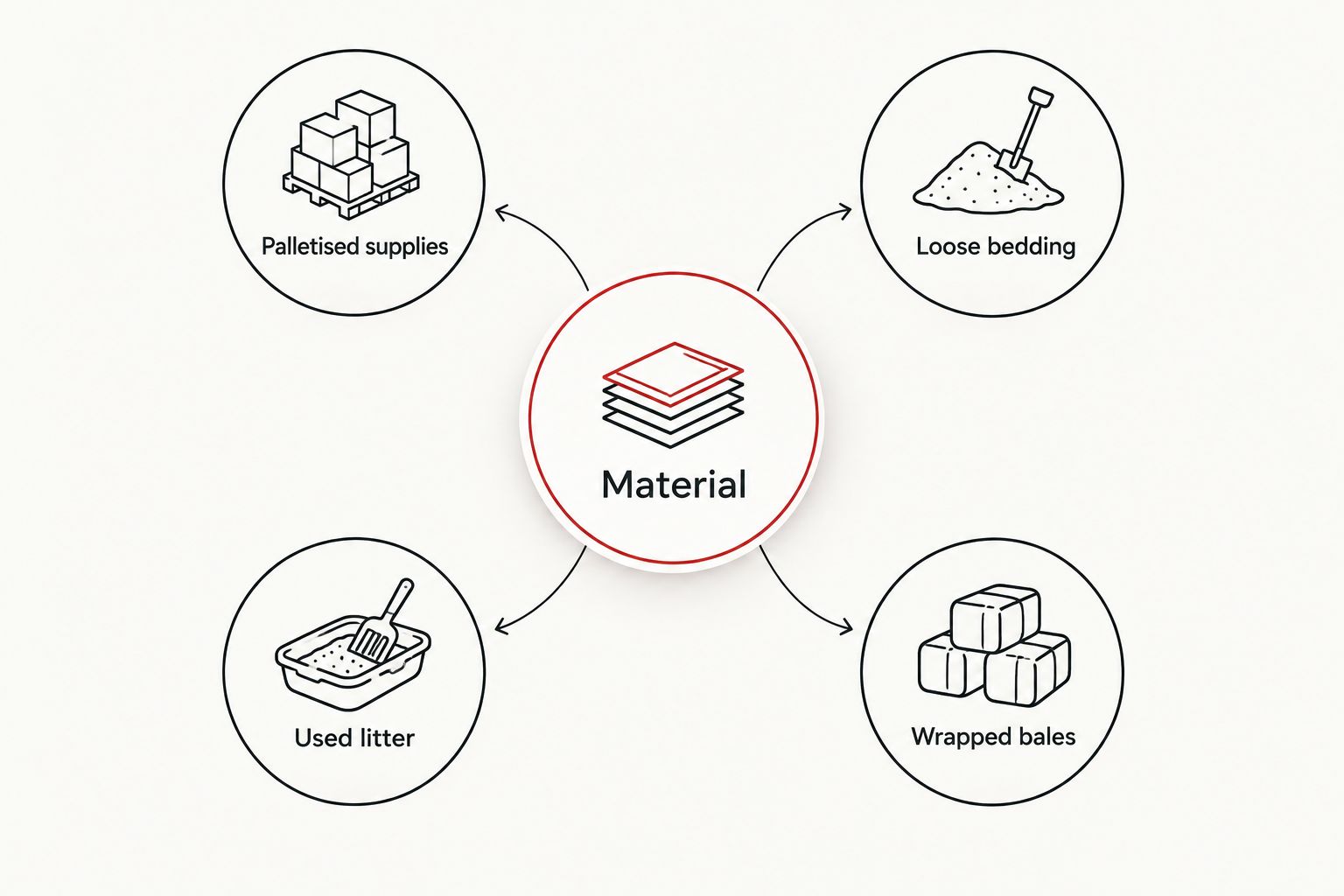
The material shortlist comes before the product shortlist. Compare the following attachment options against your measured access and loader limits; none replaces the need to verify fitment.
Compare attachment options for pig and poultry farms
| Option | Best for | Main advantage | Key limitation |
|---|---|---|---|
| Novaquip Loader Bucket 1.2m – Euro Hitch | Small tractors handling loose material where access is constrained | Compact 1.2m width and stated 78kg tare weight | Euro hitch compatibility and usable load still need checking |
| Novaquip 1KB1.5 Loader Bucket 1.5m – Euro Hitch | Loose bedding and litter where a 1.5m bucket suits the route | Stated 0.46m³ capacity | Volume does not establish safe payload weight |
| Novaquip 1KB1.8 Loader Bucket 1.8m – Euro Hitch | Loose-material work where access and loader limits permit a wider bucket | Stated 0.55m³ capacity | Greater width needs more clearance |
| Euro hitch pallet forks | Palletised feed bags and farm supplies on a compatible loader | Support pallets without transferring goods into a bucket | Unsuitable for containing loose bedding or litter |
| Manure fork or grab | Straw-rich material that benefits from tine penetration | Tines engage bulky material | Fine material escapes through open spaces |
| Bale grab | Bale handling where the attachment is intended for the bale type | Holds the bale rather than containing loose material | Bale-handling suitability does not establish suitability for litter |
The bucket dimensions above describe the supplied products, not recommended sizes for every farm. For a 2026 purchase, choose the smallest configuration that safely handles your recurring work without compromising access or load limits.
These two bucket options from Implements Direct provide a compact-versus-mid-size comparison. Check the full specifications against your loader before choosing either.


Separate clean handling from dirty handling
Draw your clean and dirty routes on the farm layout before buying additional equipment. Feed storage, bedding storage, animal housing, litter collection and wash-down areas need a deliberate handling sequence. The attachment is only one part of that system; tyres and the loader frame also contact the working environment.
Dedicated equipment keeps feed handling separate from manure handling. Shared equipment requires a documented cleaning procedure appropriate to the farm’s biosecurity plan. A quick rinse is not a substitute for removing trapped organic material and following the specified cleaning process.
When comparing attachments, inspect the places you will need to clean: bucket corners, fork frames, hinge areas and hydraulic components. Protect couplings and follow the equipment instructions during washing.
- Assign attachments to clean or dirty work wherever practical.
- Mark storage positions so operators can identify the assigned use.
- Remove organic material before the specified disinfection process.
- Include tyres, loader surfaces and contact points in the cleaning plan.
- Keep wash-down discharge away from clean storage areas.
Trial the complete handling route before routine use
Walk the route first, then check the attachment setup in a clear area using the manufacturer’s procedure. Verify locks, visibility, clearance and the intended discharge position before introducing routine loads. Keep people and animals outside the operating area.
An empty attachment checks access, but not the behaviour of a loaded machine. Confirm the load is within the complete setup’s limits, then assess the planned task under controlled conditions. Stop if the load obstructs visibility, clearance is inadequate or stability is in doubt.
For your 2026 equipment review, record problems by job rather than by attachment alone. A suitable bucket can still be a poor choice for a route with a tight turn or an unsuitable unloading position.
- Inspect attachment locks and hydraulic connections before use.
- Check the route with doors and gates secured.
- Establish exclusion areas for people and animals.
- Confirm load support and visibility before travelling.
- Record clearance, cleaning and discharge problems for correction.
Common mistakes pig and poultry farms make
- Choosing a bucket on dry bedding alone. Used litter presents a different loading problem. Assess the material actually removed, not just the clean material delivered.
- Treating a fork rating as tractor lifting capacity. Check the loader, hitch, attachment and tractor limits together at the required working position.
- Buying width before measuring the shed. Include door hardware, turning space, internal fittings and the load in the clearance check.
- Sharing feed and manure equipment without a cleaning procedure. Define attachment use and cleaning before the equipment enters service.
- Buying a clamp for jobs that need containment. A grab holds suitable bulky material; it does not turn open tines into a solid litter bucket.
FAQ
What are the best loader attachments for pig and poultry farms?
The best loader attachments for pig and poultry farms match the material: pallet forks for palletised supplies, solid buckets for loose bedding and litter, and suitable grabs for bulky material. Confirm hitch fitment, loader limits and shed access before choosing a size.
Is a bucket or pallet fork better for feed handling?
Pallet forks suit feed bags secured on suitable pallets, while a solid bucket contains loose material. Do not use forks for unsupported bags or suspended loads unless the equipment is specifically approved for that task.
Will a Euro hitch attachment fit my compact tractor?
A Euro hitch attachment requires a compatible loader mounting system; the tractor being compact does not establish fitment. Identify the loader model and compare its hooks, pins and locks with the attachment specification.
How do I choose a bucket size for poultry litter?
Choose bucket size from loader limits, material weight, shed clearance and discharge height. Bucket volume describes space, not a safe payload weight, so assess the actual litter you handle.
Can I use the same bucket for pig manure and feed?
Shared use requires a documented cleaning procedure appropriate to the farm’s biosecurity plan. Dedicated attachments keep the two jobs separate; shared equipment needs removal of contamination and the specified cleaning process before clean work.
Does a lightweight bucket increase what my loader can carry?
A lighter attachment uses less of the lifting allowance, but it does not increase the loader’s rated capacity. Check the complete setup at the required load position and height, including any adaptor.
What should I check before buying loader attachments in 2026?
Check the loader model, hitch, attachment weight, operating requirements, load limits and measured work route. Send those details with mounting photographs when asking Implements Direct about a product.
One last thing
The attachment that fits the loader still needs to fit the job. Before placing an order, write down the material, its weight, the narrowest access point and the discharge position on one job sheet. Keep that sheet with your 2026 equipment records so the next operator checks the same limits rather than relying on memory.